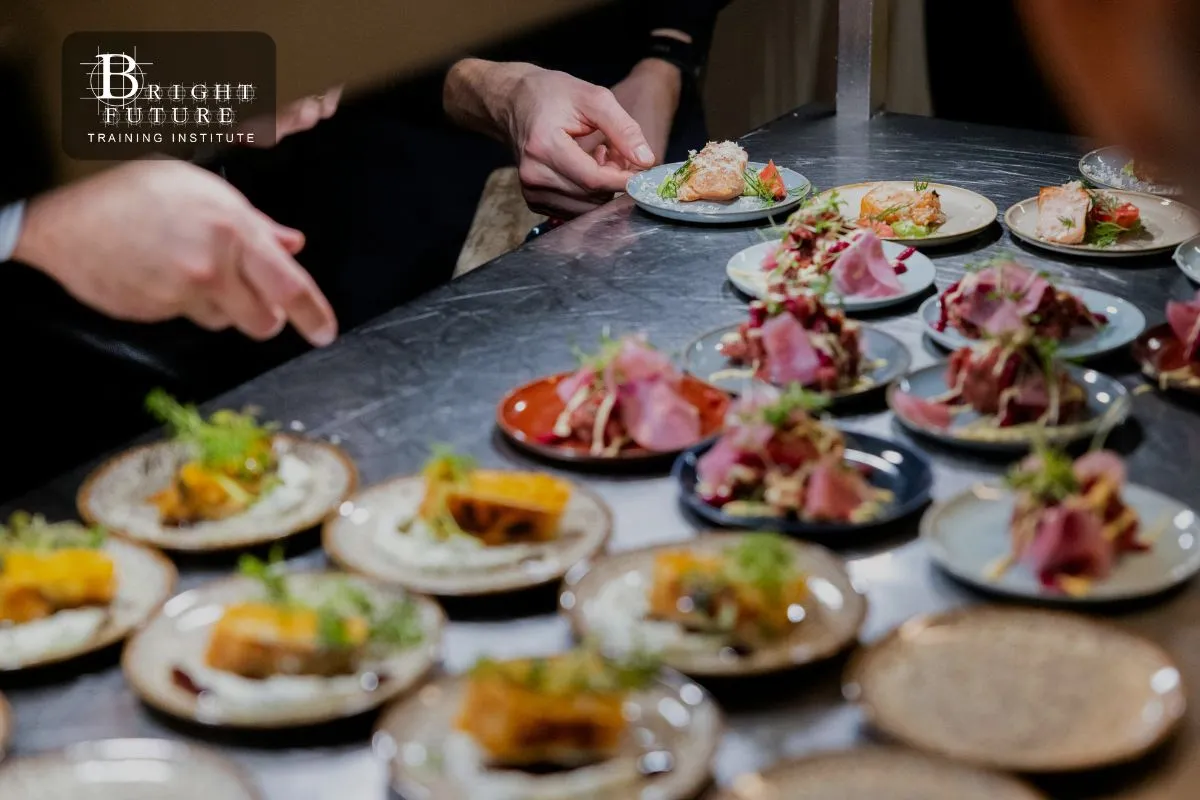
Embarking on a Culinary Arts Course is a transformative journey that meticulously deconstructs the craft of cooking and rebuilds it from the ground up through rigorous discipline, scientific understanding, and artistic expression. It begins with mastering the sacred geometry of knife cuts and the alchemy of stocks and mother sauces, then progresses to the precise science of heat application-from harnessing the Maillard reaction to the gentle art of poaching-all within the structured ecosystem of a professional kitchen brigade. Here, the principles of mise en place, relentless cleanliness, and grace under pressure forge not only technical skill but an entirely new mindset. This comprehensive education seamlessly blends global culinary techniques with critical business acumen, such as cost control and menu engineering. Ultimately, it serves as your passport to diverse culinary careers, transforming raw passion into professional prowess and empowering you to create, innovate, and nourish within the vibrant world of gastronomy.
This comprehensive guide explores what a serious Culinary Arts course truly entails-the skills, the mindset, the unseen hours, and the profound personal evolution. Whether you’re considering a program like the one at Bright Future Training Institute or any reputable institution, understanding this journey’s depth is your first step toward the kitchen.
Section 1: The Foundation - Building Your Culinary Cathedral
A professional culinary education doesn’t start with complex recipes. It starts with deconstructing food to its absolute fundamentals. Think of it as learning the alphabet before writing a novel.
The Religion of Knife Skills
Your knife becomes an extension of your hand. This isn’t about hacking; it’s about precision engineering.
-
The Sacred Geometry: You’ll learn cuts defined by exact millimeter measurements, each with a specific purpose.
-
Brunoise (1/8-inch cube): For garnishes that dissolve elegantly into sauces.
-
Julienne (1/8” x 1/8” x 2”): The foundation for stir-fries and fine salads.
-
Small Dice (1/4-inch cube): The workhorse for mirepoix, the flavor base of countless dishes.
-
-
Muscle Memory Drills: You’ll process mountains of onions, carrots, and potatoes. The goal is consistency-every piece identical-to ensure even cooking. The rhythmic tap-tap-tap of the knife becomes your meditation.
The Liquid Architecture: Stocks & Sauces
Here, you learn that flavor is built, layer by layer, often in the quiet, unseen hours before service.
-
The Trinity of Stocks:
-
White Stock: Blanched bones simmered with mirepoix for clarity and purity.
-
Brown Stock: Bones roasted to deep caramelization before simmering, creating complex, rich depth.
-
Fumet: A delicate fish stock, sweated not roasted, cooked briefly to capture the sea’s essence.
-
-
The Five Mother Sauces: The cornerstone of French cuisine. Mastering these means you can create a thousand variations.
-
Béchamel (Milk + White Roux): The creamy base for lasagna and mornay.
-
Velouté (White Stock + Blond Roux): The elegant foundation for supreme sauces.
-
Espagnole (Brown Stock + Brown Roux + Tomato): The robust start to a classic demi-glace, reduced to a glossy, coating perfection.
-
Tomato Sauce: Built from fresh tomatoes, aromatics, and patience, far beyond anything jarred.
-
Hollandaise (Egg Yolk + Clarified Butter + Acid): A lesson in delicate emulsion. Breaking and rescuing a “split” hollandaise is a rite of passage that teaches temperature control and patience.
Food Safety: The Non-Negotiable Law
Before touching food, you learn the science of safety. HACCP principles, cross-contamination, temperature danger zones-this knowledge is your moral and professional responsibility. It’s the bedrock of every action you’ll take.
Section 2: The Science Lab - Core Cooking Methods Deconstructed
You move from what to why, understanding the physics and chemistry behind every technique.
-
The Maillard Reaction: This isn’t just “browning.” It’s the complex chemical reaction between amino acids and sugars that creates hundreds of new flavor compounds. You learn to harness it in sautéing, roasting, and grilling.
-
The Precision of Heat:
-
Sautéing: High heat, minimal fat, constant motion. The art of the quick cook.
-
Braising & Stewing: The alchemy of turning tough, inexpensive cuts into fork-tender marvels through slow, moist heat that breaks down connective tissue into lush gelatin.
-
Poaching vs. Simmering: A difference of mere degrees. Poaching (160-180°F) is a gentle kiss for delicate fish and eggs; simmering is a steady bubble for developing flavor in stocks and soups.
-
-
Modern Techniques: Many programs now include sous-vide-cooking vacuum-sealed food in a precise water bath. It teaches you that doneness is a function of exact temperature and time, yielding impossible consistency.
Section 3: The Ecosystem - The Kitchen Brigade & Service Psychology
You are no longer an individual cook; you are a cell in a living organism.
-
The Brigade de Cuisine: You learn the hierarchy, from the Executive Chef (the CEO) down to the Commis (apprentice). You’ll likely train on specific stations:
-
Garde Manger: The cold kitchen—salads, charcuterie, terrines.
-
Entremetier: Vegetables, soups, starches.
-
Saucier: The sauce and sauté station, often considered the most demanding.
-
Pâtissier: The separate, precise universe of pastry
-
-
The Symphony of Service: During a live service simulation, the kitchen becomes a chaotic ballet. The expediter calls orders: “Fire two ribeyes, mid-rare, all day!” You respond “Heard!” You call “Behind!” and “Sharp!” as you move. The pressure is immense, and the teamwork is absolute. There is no better teacher for focus, communication, and grace under fire.
Section 4: The Global Pantry & The Business Mind
World Cuisines
A modern chef is a citizen of the world. A strong program exposes you to foundational techniques from:
-
The Mediterranean: The rusticity of Italy, the boldness of Spain.
-
Asia: The wok hei of China, the balancing act of Thai cuisine, the precision of Japanese kaiseki.
-
The Middle East: Especially relevant in the UAE—the nuanced use of spices like sumac and za’atar, the art of mezze, and the mastery of rice in dishes like biryani.
The Calculator in Your Apron Pocket
Culinary arts is an art, but the kitchen is a business. You learn:
-
Menu Engineering & Costing: How to calculate food cost percentage, price a dish for profit, and design a menu that sells.
-
Inventory & Waste Control: How to use trim for stocks, repurpose leftovers, and respect the ingredient and the bottom line.
Section 5: The Invisible Curriculum - Forging the Chef’s Mindset
This is the hardest thing to teach and the most vital thing you learn.
-
Mise en Place as a Life Philosophy: “Everything in its place.” This doctrine of preparation-having every ingredient measured, peeled, chopped, and ready-becomes a metaphor for life. It is the key to efficiency and calm in chaos.
-
The Cult of Cleanliness: You don’t just clean at the end; you clean as you go. A clean station is a safe, efficient, and professional station. This discipline is non-negotiable.
-
Developing a Critical Palate: You move beyond “like” and “dislike.” You learn to identify and balance the five basic tastes (sweet, salty, sour, bitter, umami). You taste everything, constantly, asking: “What does it need?”
-
Resilience & Humility: You will make mistakes. You will burn the reduction. You will overseason the soup. You learn to accept criticism, fix errors quickly, and laugh at yourself. The kitchen burns away ego and forges resilience.
Section 6: The Toolkit & The Journey Ahead
Your Culinary Armory
You invest in and learn to care for your tools: a set of good knives (chef’s, paring, boning), a reliable thermometer, a durable peeler, and a collection of spoons for tasting and saucing. You learn to sharpen a knife on a whetstone, feeling for the perfect 20-degree angle.
Career Pathways: Where This Journey Can Lead
A Culinary Arts diploma is a key that unlocks diverse doors:
-
The Traditional Path: Working up through restaurant and hotel kitchens to become a Sous Chef, Chef de Cuisine, or Executive Chef.
-
The Specialized Route: Becoming a Pastry Chef, Charcutier, or Sommelier.
-
The Entrepreneurial Lane: Launching a food truck, catering company, boutique bakery, or farm-to-table concept.
-
The Alternative Track: Food styling, food writing, culinary education, research & development for food brands, or private cheffing.
Conclusion: Is a Culinary Arts Course Right for You?
This path is not for the faint of heart. It demands long hours, physical stamina, mental fortitude, and a passion that borders on obsession. It will test you in ways you cannot anticipate.
But if you find joy in the rhythm of a knife, the transformation of raw ingredients, the silent concentration of a perfect dice, and the electric buzz of a busy service, then it may be your calling. A serious Culinary Arts course doesn’t just teach you to cook-it teaches you to see, to taste, to think, and to create like a chef. It is a metamorphosis.
It turns the question from “Can I make this recipe?” to “How can I build something beautiful, delicious, and memorable today?” It is, ultimately, an education in one of humanity’s most fundamental and beautiful arts: the art of nourishment. Your journey begins with a single, deliberate cut. Are you ready to pick up the knife?