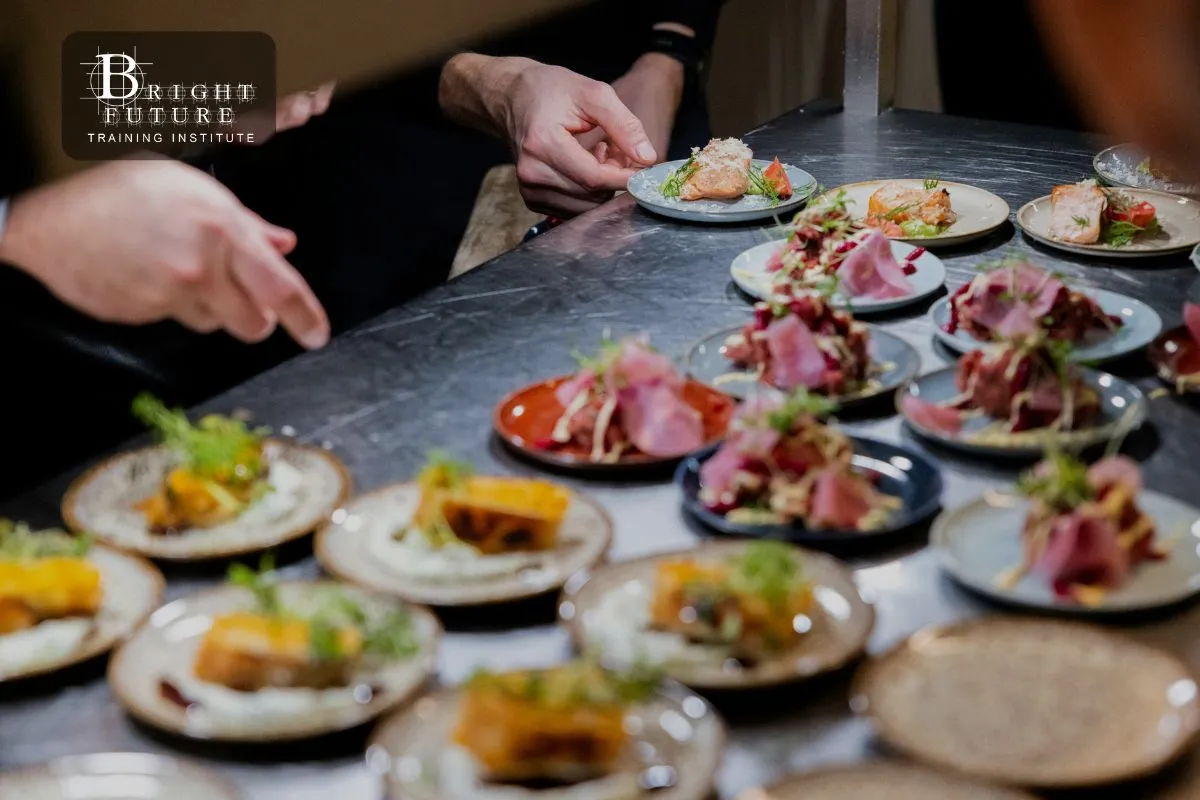
If you’re reading this, you’ve likely felt it - that persistent tug toward the kitchen. Maybe it’s the satisfaction of perfectly caramelizing onions, the creative rush of plating a beautiful dish, or the simple, profound joy of feeding people. But between that feeling and a sustainable career stands a canyon of questions: Where do I start? Am I good enough? Is this practical? And specifically, in a competitive place like Dubai, can a Culinary Arts Program in Dubai really bridge that gap?
As an institute that has guided hundreds of students from curiosity to qualification, we can tell you with certainty: Yes, a comprehensive culinary arts program can be the most transformative investment you make in yourself. But this transformation is not a vague promise; it’s a concrete, structured process with definable inputs and measurable outcomes. Let’s dismantle the dream and rebuild it as a viable plan, layer by meticulous layer.
The Dubai Advantage: Why Location is Your First Ingredient
Choosing Dubai is not an aesthetic choice; it’s a strategic career decision. Training here offers unparalleled advantages that are baked into your education.
-
A Living, Breathing Global Market: Dubai isn’t just multicultural; it’s a micro-competition of the world’s best food scenes. Within a 10-mile radius, you have access to:
-
Fine Dining Powerhouses: Michelin-starred establishments and venues by celebrity chefs like Gordon Ramsay, Nobu Matsuhisa, and Massimo Bottura, who set an international standard for technique and service.
-
Authentic Ethnic Enclaves: Entire neighborhoods dedicated to pristine Filipino, Lebanese, Pakistani, and Ethiopian cuisines, offering masterclasses in authenticity.
-
The Innovation Frontier: Avant-garde concepts focusing on plant-based haute cuisine, hyper-local foraging, and experiential dining that blends food with technology and art.
-
The Hospitality Engine: Over 750 hotels, each with multiple food and beverage outlets, creating a constant, insatiable demand for skilled culinary talent at every level, from banquet kitchens to specialty restaurants.
-
-
A Curriculum Influenced by Market Dynamics: In Dubai, your training is constantly informed by what’s happening outside the classroom. A lesson on sustainable sourcing might include a field trip to the Dubai Vertical Farm or a local hydroponic producer. A module on food trends will directly reference the latest hits from Time Out Market or the openings in Dubai Design District (d3).
-
Networking in the Ecosystem: Your professional network begins on day one. Through organized industry visits, guest lectures from Executive Chefs and F&B Directors, and participation in events like The Hotel Show or Gulfood, you’re not just learning about the industry; you’re meeting it, shaking its hand, and making impressions that lead to internships and jobs.
The Detailed Blueprint of Transformation: A Four-Pillar Process
Transformation occurs through a deliberate curriculum built on four interconnected pillars.
Pillar 1: Foundational Technique & Culinary Science – Building the Non-Negotiables
This is the unglamorous, essential bedrock. Before you deconstruct a dessert, you must know how to bake a perfect sponge.
-
The Physics and Chemistry of Cooking: We move beyond “add salt” to understanding osmosis in brining. Beyond “sear the steak” to understanding the Maillard reaction. You’ll learn how gluten development affects texture, how emulsifiers stabilize a vinaigrette, and how temperature gradients cook a piece of fish evenly. This scientific literacy makes you a problem-solver, not just a recipe executor.
-
Systematic Skill Progression: The training is cumulative.
-
Phase 1 – The Toolbox: Knife skills (classical cuts: julienne, brunoise, chiffonade), stock production (white, brown, fumet), and mother sauces (Béchamel, Velouté, Espagnole, Tomate, Hollandaise).
-
Phase 2 – Application: Fabrication (breaking down whole chickens, fish, and primal cuts of meat). Dry-heat, moist-heat, and combination cooking methods applied to proteins, vegetables, and starches.
-
Phase 3 – Synthesis: Creating complete, balanced dishes, timing multiple components, and basic plate presentation.
-
Pillar 2: World Cuisine & Specialized Module Integration – Expanding Your Vocabulary
With a solid foundation, you learn the “languages” of global cuisine, each with its own grammar.
-
Core Cuisine Rotations: You will cycle through dedicated kitchens or intensive modules:
-
Classical & Modern French: The backbone of professional cuisine. From quenelles and consommés to contemporary plating techniques.
-
The Mediterranean Basin: Focusing on the clean, ingredient-driven philosophies of Italian, Spanish, and Greek cooking - perfecting risotto, paella, and mastering olive oil and vinegar.
-
South & Southeast Asian: Understanding the complex layering of spices in Indian curries, the balance of sweet-sour-salty in Thai cuisine, and precise techniques for dumplings and stir-fries.
-
Middle Eastern & North African (MENA): A critical specialization in Dubai. You’ll work with ingredients like za’atar, sumac, and pomegranate molasses, learning to prepare mezze, master slow-cooked lamb, and bake traditional breads like khobz.
-
-
The Pastry & Baking Parallel Track: Often treated as a separate discipline, we integrate core pastry fundamentals: Viennoiserie (laminated doughs for croissants), Pâtisserie (entremets, tarts), Chocolate & Sugar Work, and Artisan Bread Baking (sourdough starters, gluten development, baking with steam).
Pillar 3: The Professional Kitchen Ecosystem – Learning the Culture
A kitchen is a unique social and operational system. We simulate its reality.
-
Brigade System Immersion: You will work in stations (Garde Manger, Saucier, Poissonnier) and take on roles (Chef de Partie, Commis) during live service simulations. You learn the chain of command, communication protocols (“Oui, Chef!”), and how to function as a single, efficient organism under pressure.
-
Operational & Safety Mastery:
-
HACCP Certification: Integrated into the program, teaching you Hazard Analysis Critical Control Point protocols for receiving, storing, preparing, and serving food. This is a legal requirement and a resume essential.
-
Cost Control & Kitchen Math: Calculating food cost percentages, portion costing, recipe scaling, and minimizing waste. This bridges the gap between the creative kitchen and the business office.
-
Supply Chain & Vendor Management: Understanding seasonality, how to speak with suppliers, and evaluating quality in produce, meat, and seafood.
-
Pillar 4: Career Architecture & Portfolio Development – Building Your Brand
Your final project isn’t just a dish; it’s your professional launch package.
-
The Digital Portfolio: You will be trained to professionally photograph your dishes, write descriptive menu copy, and compile your work into a digital portfolio (website or PDF). This becomes your visual resume.
-
Specialization Pathways: In advanced stages, you can gravitate toward a track:
-
À la Carte / Fine Dining
-
Pastry & Chocolate Arts
-
Bread Baking & Fermentation
-
Culinary Nutrition & Wellness
-
Food Styling & Media
-
-
The “Stage” (Externship) & Placement: We facilitate a mandatory externship - a short, unpaid training placement in a partner restaurant or hotel kitchen. This is your audition for the real world, where performance often leads to a job offer. Our career services team then provides targeted resume reviews, mock interviews with real chefs, and direct job placement support.
Profile of the Transformable Student: Is This You?
This journey demands dedication. It resonates most powerfully with individuals who possess specific traits or find themselves at clear junctures.
-
The Analytical Creator: You are both right and left-brained. You love the art of plating but are fascinated by the chemistry of fermentation. You want to understand the “why” as much as the “how.”
-
The Systematic Beginner: You have passion but little formal skill. You crave a structured, linear, and comprehensive path from zero to professional competence, avoiding the gaps and bad habits of self-teaching.
-
The Career Reinventor: You have success in another field but lack fulfillment. You view the kitchen not as an escape, but as a destination for a more tangible, expressive, and human-centric career. Your maturity and work ethic become significant assets.
-
The Future Entrepreneur: Your end goal is your own brand—a cafe, catering company, or product line. You need the technical credibility of a chef’s training combined with the operational and financial literacy to build a business plan around your food.
The [Your Institute Name] Methodology: Our Engine for Your Transformation
Our program is designed as a seamless progression from novice to job-ready professional.
-
The Phased Learning Journey:
-
Term 1: Foundations & Discipline. Intensive focus on knife skills, stocks, sauces, basic cooking methods, and kitchen safety. Building speed, accuracy, and respect for the craft.
-
Term 2: Global Technique & Palate Development. Rotations through world cuisines. Emphasis on flavor profiling, ingredient pairing, and intermediate plating.
-
Term 3: Synthesis, Specialization & Service. À la carte service simulations, advanced pastry work, and electives. Development of your final portfolio and preparation for externship.
-
Term 4: Externship & Career Launch. Real-world placement, followed by career coaching and job placement support.
-
-
Faculty as Mentors: Our instructors are selected not only for their accolades (many have Michelin or Forbes Guide experience) but for their ability to teach. They are mentors who provide brutal honesty wrapped in constructive support, preparing you for the exact personalities you will meet in professional kitchens.
-
Facilities as a Professional Tool: Our campus is not a school with kitchens; it is a collection of professional kitchens used for teaching. You will train in:
-
A main production kitchen with commercial ranges, combi-ovens, and blast chillers.
-
A dedicated, temperature-controlled pastry and bakery lab.
-
A demonstration theater with overhead mirrors and live streaming for detailed technique viewing.
-
The Unvarnished Truth: What Does This Transformation Require of You?
A program provides the platform, but you are the performer. This path demands:
-
Physical & Mental Stamina: Long hours on your feet, working with heat, pressure, and sharp tools.
-
Humility & Resilience: You will make mistakes. You will receive direct, often blunt, criticism. The ability to learn from this without ego is paramount.
-
Financial & Temporal Investment: This is a serious commitment of both time and resources. The return on investment (ROI) is a high-paying, global career, but the upfront cost is real.
Conclusion: From Question to Conviction
So, can a culinary arts program in Dubai transform your future? The evidence is overwhelming. It provides the technical proficiency, the professional mindset, the industry-recognized credential, and the strategic network that collectively convert a culinary dream into a viable, thriving career.
It transforms “I love to cook” into “I am a skilled saucier.” It transforms a hobby into a profession. It transforms uncertainty into a clear, actionable career path on the world’s stage.
This isn’t just about getting a job; it’s about joining a proud, demanding, and deeply rewarding profession. It’s about building a life where your work is an expression of your creativity, discipline, and care for others.