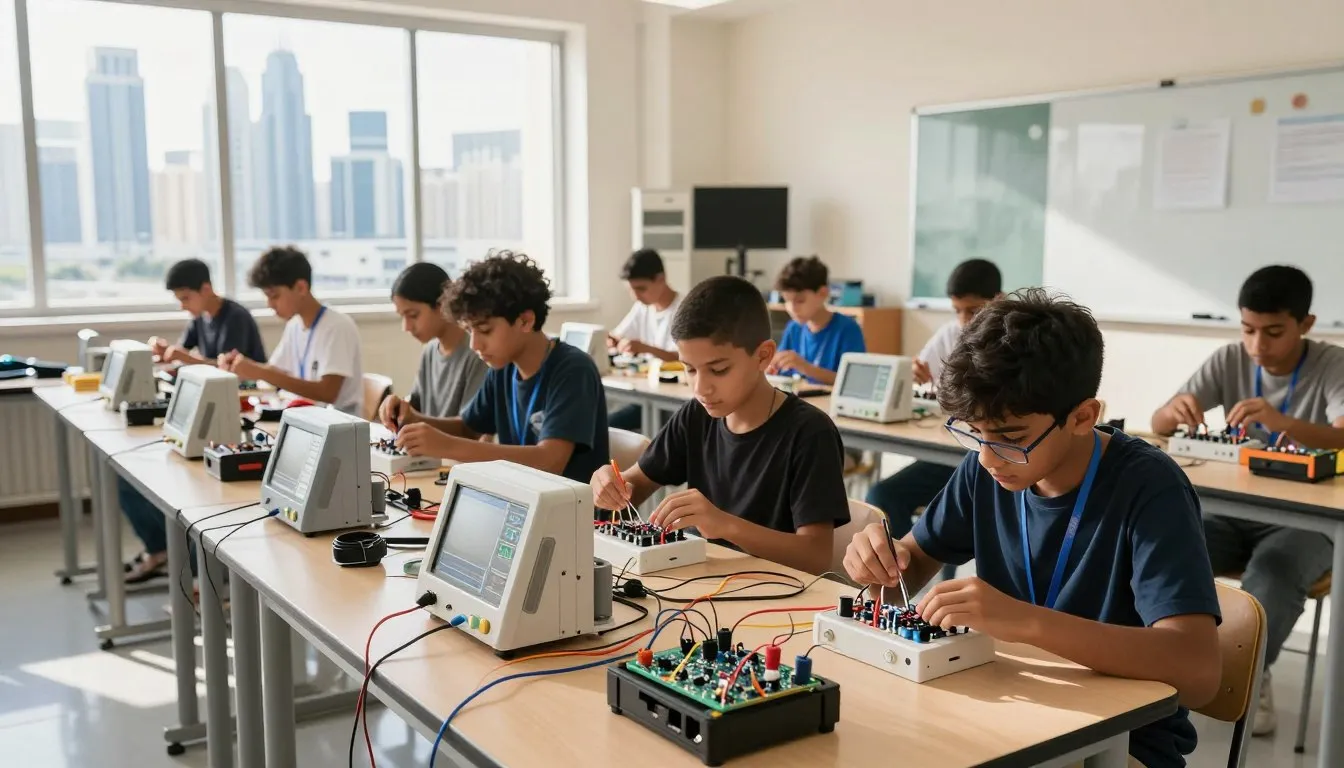
We remember our first time in a live electrical lab in Dubai. The hum of transformers and the teamwork were unforgettable. It showed us why an electrical course in Dubai is important. It turns dreams into jobs and curiosity into career growth.
At Bright Future Training Institute (BF Training), we see electrical training as a door to many jobs. These include roles in construction, maintenance, and renewable energy. We mix hands-on labs with curriculum that prepares students for the job market.
Want to know how an electrician course in Dubai can boost your career? It aligns with what employers in the UAE need. Plus, we offer support to find a job. For more info, reach out to BF Training at bftraining.ae, call +971559234565, email [email protected], or visit Suite #404, fourth floor NBQ building, Bank Street, Bur Dubai.
Key Takeaways
- An electrical course in Dubai bridges classroom learning and workplace-ready skills.
- BF Training focuses on practical, accredited training that matches employer expectations.
- Graduates find opportunities in construction, maintenance, and solar sectors across Dubai.
- Contact BF Training for enrollment support and personalized career guidance.
- Practical labs and industry-relevant curriculum shorten the path to job readiness.
Why Choose an Electrical Course in Dubai for Career Growth
We help learners gain practical skills for real jobs. An electrical course in Dubai opens doors to certified skills, hands-on training, and safety knowledge. These are key for employers in the UAE.
Strong demand for electrical professionals in the UAE
Dubai’s growth in business and homes boosts the need for electricians and technicians. Projects like Expo 2020 and new buildings require skilled workers.
Jobs are plentiful in airports, metro lines, tall buildings, and malls. This means lots of chances for those with the right training.
Competitive salaries and benefits in Dubai
Electricians in Dubai earn good wages, often tax-free. They also get health insurance and sometimes housing help. More experienced workers earn even more.
We prepare students for the job market. This way, they can start with better pay and benefits.
Rapid infrastructure and construction projects driving job growth
Big projects like airport upgrades and new metro lines need electrical skills. These projects keep the demand for electrical workers high.
By focusing on technical skills, students can find more job opportunities. This leads to better careers in Dubai’s electrical field.
We suggest contacting Bright Future Training Institute. They can help you choose the right program for Dubai’s job market.
| Role | Typical Salary Range (AED/month) | Common Benefits |
|---|---|---|
| Electrical Technician | 4,000 – 8,000 | Health insurance, overtime pay, training allowances |
| Licensed Electrician | 6,000 – 12,000 | Accommodation allowance in some contracts, visa sponsorship |
| Electrical Supervisor | 10,000 – 20,000 | Performance bonuses, health cover, paid leave |
| Electrical Engineer (entry-level) | 12,000 – 22,000 | Professional development, certification sponsorship, allowances |
Overview of Electrical Training Program in Dubai
We explain the paths to jobs and certified skills in Dubai’s electrical field. Students need to know about program types, how they are delivered, and the importance of accreditation. This helps them choose a program that meets employer needs.
Types of programs available
Short vocational electrician courses teach basic wiring and home installations quickly. Certificate programs for electrical technicians cover more topics like industrial control and fault diagnosis.
Specialized modules focus on skills like solar electrical systems and programmable logic controllers. Courses also cover safety and compliance, including site rules and permit-to-work procedures.
Duration, formats, and delivery methods
Course lengths vary from a day to 6 months. Short courses are great for quick skills, while longer ones prepare for more technical roles.
Learning mixes classroom theory, practical labs, and online modules. This blend ensures students get hands-on experience and meet employer standards.
Accreditation and recognition of training providers in the UAE
Accredited providers offer certificates that meet UAE standards. Employers in Dubai look for recognized qualifications from institutes that follow national and international standards.
Bright Future Training Institute offers practical, accredited courses. These include solar and electrical modules, designed to meet local industry needs.
Key comparisons to guide your choice
| Program Type | Typical Duration | Delivery Method | Best For |
|---|---|---|---|
| Short Safety Certifications | 1 day to 1 week | Classroom, practical drills | Immediate site compliance and safety awareness |
| Vocational Electrician Course | 3 to 6 months | Blended: online theory + lab sessions | Entry-level technicians seeking electrical job training Dubai |
| Electrical Technician Certificate | 1 to 3 months | Classroom and hands-on workshops | Technicians needing technical depth and an electrical certification course |
| Specialized Modules (Solar, PLC) | 2 days to 8 weeks | Practical labs, simulation training | Professionals pursuing niche skills and higher employability |
| Combined Safety & Compliance | 1 week to 1 month | Practical site drills, assessments | Workers needing accredited proof of regulatory competence |
electrical course dubai job
We make our electrical courses fit what Dubai employers want. Our program covers practical skills like installation and maintenance. It also includes safety training and lab hours.
This focus helps employers trust our graduates. It shows they’re ready for electrical jobs in Dubai.
How the course aligns with employer needs in Dubai
We match our course to what employers need. This includes tasks like wiring and panel work. Students get hands-on experience in labs that mimic real sites.
This experience gives them verified training records. Employers like these records a lot.
Our safety training meets Dubai’s standards. It covers important procedures like permit-to-work. This lets graduates start work with recognized skills.
Employers look for candidates with both practical skills and experience. They want to see clean, verifiable experience logs.
Typical job titles and roles graduates can expect
Our graduates often become Electricians or Electrical Technicians. They also find jobs as Maintenance Electricians in facilities management.
With more experience, they can become Panel Winders or Electrical Supervisors. Those interested in renewables might become Solar Technicians.
Case studies of successful placements in the local market
A graduate from our program got a job as a Maintenance Electrician with a big contractor. They praised the candidate’s lab skills during the review.
Another trainee focused on solar and got a job as a Solar Technician. After six months, they were promoted to lead on-site commissioning tasks.
We help with job placement through CVs, mock interviews, and working with companies like ALEC Engineering and Emrill. This support increases the chances of finding a job in Dubai’s electrical sector.
Electrical Certification Course: Which Certificate Matters Most
We help learners navigate through the many certifications. This ensures employers and regulators trust the qualifications. The right electrical certification course boosts employability and safety compliance in Dubai projects.
We compare local and international credentials. We outline clear certification paths and explain renewal rules. This keeps technicians ready for the field.
Local UAE certifications vs. international certifications
Local approvals from Dubai Electricity and Water Authority (DEWA) and others show a candidate meets UAE standards. International certificates from City & Guilds or IEC-based programs add technical depth and global recognition. Employers often look for a mix of local permits and international qualifications.
Certification pathways for electricians and technicians
Typical progression starts with a basic electrical certificate. It covers wiring basics and safety. Intermediate certificates validate practical skills and testing ability.
Specialized certificates in solar PV, high-voltage systems, or instrumentation lead to niche roles. A staged learning plan in Dubai supports career growth and meets employer needs.
Renewal, continuing education, and maintaining compliance
Many permits need renewal and Continuing Professional Development (CPD) hours. Renewal cycles vary by certification and issuing body. Staying updated with DEWA regulations is key to avoid work interruptions.
We assist candidates in electrical job training Dubai with exam prep and CPD planning. Our support helps technicians stay compliant and maintain their skills for employers and inspectors.
Choosing the right credential mix in Dubai strengthens employability and ensures compliance. An electrical certification course that balances local and international standards prepares graduates for success in the UAE.
What You Learn in an Electrician Course Dubai
We create a curriculum that turns eager learners into skilled electricians. The course in Dubai mixes technical knowledge with practical skills. This way, graduates are ready to meet the needs of employers in Dubai’s industries.
Core technical skills taught
Students learn about single- and three-phase wiring, and how to install distribution boards. They also get to know about conduit systems for commercial and residential sites. Training covers earthing, grounding, and motor control wiring, plus basic PLC concepts for industrial settings.
They focus on fault diagnosis, using tools like multimeters and clamp meters. This practice is key to their success.
Safety standards and regulatory knowledge
We teach UAE safety standards and how to follow DEWA connection rules. The program also reviews building and civil codes that impact electrical work. Students learn about PPE, lock-out/tag-out, and risk assessment to work safely.
Hands-on practical modules and simulation labs
Practical modules include live wiring and simulated fault scenarios. Students work with real components like MCCBs and solar PV panels. Simulation labs help them practice troubleshooting, reducing downtime on real sites.
Graduates can safely install systems, do routine maintenance, and document tasks. They can also troubleshoot efficiently. This makes them ready for jobs in Dubai’s electrical industry.
Job Opportunities in Electrical Field Across Dubai Sectors
We help students find jobs in Dubai’s many industries. Our training mixes hands-on work with safety lessons. This way, graduates get the skills employers want, making finding a job easier.
Construction and real estate developments
Fast-paced building projects need skilled electricians. They work on homes, malls, and hotels. Jobs include installing systems and making sure they work right.
Commercial and industrial maintenance roles
Companies need electricians to keep things running smoothly. Jobs include fixing equipment and keeping systems working well. This is key for keeping operations going without problems.
Renewable energy and solar sector opportunities
The UAE is growing its solar energy. This means more jobs in solar installation and maintenance. Taking a solar course can help you get hired as a solar technician.
Being able to move between jobs is a big plus. Skills like wiring and fixing problems are useful everywhere. We teach these skills so you can explore different career paths.
Career Prospects in Electrical Field for Skilled Graduates
We help students find clear career paths that match UAE market needs. Those who finish an electrical course in Dubai get skills that employers want. This opens doors to growth and more chances.
Career progression: from technician to supervisor and engineer roles
Starting jobs are often as electricians or junior technicians. With 1–3 years of work and skills shown, people move up to senior technician roles.
More experience and certifications lead to supervisor or team-leader jobs. Those with engineering skills might become electrical engineers or project managers on big projects.
Specializations that boost employability
Special skills make you more attractive to employers. Areas like solar PV, automation, high-voltage, BMS, and testing are in demand.
Choosing a special area meets needs in construction, maintenance, and renewable energy. Our electrical engineering courses in Dubai focus on these key areas.
Expected timeline for promotions and salary increments
Advancement times vary based on performance and certifications. Technicians might move up in 1–3 years. Supervisors come after 3–6 years of experience.
Salary increases with credentials, safety records, and skills like communication and leadership. Our training, labs, and assessments help you grow faster and earn more in the electrical field.
We support your career growth with specific training, hands-on labs, and assessments for employers. Our method boosts your career in the electrical field, helping you move from vocational to technical and engineering roles.
Electrical Job Training Dubai: What Employers Look For
We help learners focus on the skills and records that employers value in Dubai. They look for technicians who are both skilled and have proof of training. They also want to see professional habits that help in growing a career.
Technical competence and practical experience
Employers want technicians who can do hands-on work well. This includes installing, diagnosing, and using meters safely. Our program in Dubai focuses on lab work and on-site training to show practical skills.
We make sure trainees do timed exercises and task-based assessments. These are key parts of their portfolio for job applications.
Soft skills and workplace professionalism
Skills like being on time, communicating clearly, and working well in a team are important. We teach these skills so graduates can be reliable team members.
Students practice in mock site briefings and teamwork drills. This prepares them for real work and helps them keep their jobs and move up in their careers.
Relevant certifications and documented training hours
Employers need to see proof of training and hours worked. They look for safety certificates, competency cards, and detailed logbooks.
We include an electrical certification course in our program. We give out verified competency records and keep up with professional development. These documents help employers see if a candidate is ready.
Here’s a quick look at what employers want and how we prepare you for it.
| Employer Priority | What They Expect | How We Prepare You |
|---|---|---|
| Hands-on technical skills | Fault diagnosis, wiring, commissioning, meter use | Practical labs, live simulations, supervised site tasks with assessor sign-off |
| Workplace professionalism | Attendance, communication, safety culture, teamwork | On-site etiquette modules, team projects, role-play scenarios |
| Verified certification | Accredited certificates, safety cards, CPD evidence | Included electrical certification course, issued competency cards, logged CPD hours |
| Documented experience | Logbooks, portfolios, employer references | Structured portfolios, task checklists, placement endorsements from partners |
| Fit for the role | Quick adaptation, problem-solving under pressure | Mock assessments, time-pressured tasks, real-world troubleshooting drills |
How Bright Future Training Institute Prepares You for the Job Market
We create a direct path from learning to working at Bright Future Training Institute. Our method mixes solid theory with practical hands-on training. This way, our graduates are ready for jobs in electrical work, facilities, and solar fields.
Practical curriculum aligned with industry requirements
We design each lesson with what employers want in mind. Our curriculum includes wiring, finding faults, following rules, and documenting projects. Students do real tasks that match what they’ll face on the job, getting them ready to work right away.
Experienced instructors and real-world lab training
Our teachers are experts with real-world Dubai project experience. They lead students through mock setups, load tests, and safe practices in our labs. We also offer courses in solar, CCTV, HVAC, and IT to build skills employers look for.
Placement assistance and employer partnerships
We offer help with finding jobs, including resume checks, interview tips, and practical tests. Bright Future Training Institute works closely with construction, facilities, and solar companies. These partnerships help our graduates find jobs in electrical work.
Interested students can book assessments or get advice by visiting http://bftraining.ae, calling +971559234565, emailing [email protected], or coming to our Bur Dubai campus. We’re here to boost your skills and help you find a job through our electrical training in Dubai.
Electrical Engineering Courses in Dubai: Academic vs. Vocational Paths
We help you understand two main paths in the UAE’s electrical sector. One is through university degrees, which focus on engineering theory and research. The other is through short, practical certificates for immediate job readiness.
Both paths lead to good job prospects in Dubai’s electrical field. It all depends on your career goals.
Comparing degree programs and short vocational certificates
Degree programs, like BEng or BSc in Electrical Engineering, cover math, circuit theory, and systems design. They prepare you for roles in engineering, design, or project management at places like DEWA or big construction firms.
Vocational certificates focus on wiring, installation, testing, and safety. They offer a quick route to on-site jobs and trade certifications that employers want.
When to choose a hands-on electrician course vs. an engineering degree
Go for a hands-on electrician course if you want to work right away. It’s great if you’re short on time and money, and you’re interested in technical or maintenance roles. Employers often look for practical skills and documented experience.
Choose an engineering degree for roles that need deep theory and formal qualifications. This path is good for design, research, or supervisory positions. It also opens doors to consultancy, systems engineering, and senior management in energy and construction.
Bridge programs and upskilling routes
Bridge programs help technicians earn academic credits toward a degree. They save time and keep your work experience valuable.
Micro-credentials and short modules in areas like PLCs, solar systems, and safety offer specific skills. Bright Future Training Institute offers certificates and bridging courses. They aim to boost your job chances and help you move up in your career.
Professional Development in Electrical Industry and Continuing Education
We help career-focused professionals grow their skills. This means learning new skills, getting certifications, and staying up-to-date with industry standards. Our goal is to turn skilled technicians into trusted experts in the UAE.
Advanced technical courses and micro-credentials
We have advanced courses that focus on specific areas. You can learn about advanced troubleshooting, solar PV system design, and more. These courses help you get ready for complex jobs and leadership roles.
Workshops, seminars, and industry events in Dubai
Our workshops and seminars keep you updated on the latest in the field. You’ll learn about DEWA rules, safety, and new technologies. Attending conferences and expos also helps you network and find job opportunities.
Online learning options and flexible schedules
We know you might have a busy schedule. That’s why we offer flexible learning options. You can take classes in the evenings or weekends, or learn at your own pace. This way, you can keep your job while you study.
Bright Future Training Institute offers flexible education that fits your needs. Our programs meet employer demands and prepare you for real-world challenges. This way, you’ll be ready for your next career step in Dubai.
Solar Training Course and Its Role in Electrical Careers
We add solar modules to our electrical classes to help students find jobs in renewable energy. Our solar training course teaches hands-on skills in photovoltaic systems. It also improves their basic electrical knowledge.
This helps students find more job options and stand out in Dubai’s competitive job market.
Solar technician, solar simulation, and solar professional courses
Our Solar Technician module teaches how to install PV systems, wire, and choose inverters. Students learn to mount modules, manage cables, and check for safety in labs.
The Solar Simulation unit trains on system sizing, yield estimation, and performance modelling. Learners use tools to match loads and optimize panel layouts.
Solar Professional courses cover advanced commissioning, fault-finding, and grid-tie integration. Students learn about standards, protective devices, and troubleshooting with Siemens and Schneider Electric equipment.
Growing solar job market in the UAE and regional projects
The UAE and GCC are investing in solar projects to meet renewable goals. This creates a steady need for certified solar installers and technicians.
Big projects and distributed energy schemes offer many jobs in the electrical field. We make sure our training meets employer needs for these roles.
Certifications that increase hiring in renewables
Manufacturer certifications, like from SMA, Sungrow, and Huawei, boost credibility for specific inverters. Regional PV installation and DEWA-aligned certifications also help job seekers in Dubai.
We suggest combining solar training with recognized electrical certifications. This combination shows practical skills, training hours, and UAE compliance.
How to Apply and Enroll: Practical Steps for Prospective Students
We help applicants through a clear, step-by-step process. This process matches their career goals with the right program. Prospective students aiming for an electrical course in Dubai get tailored advice and flexible schedules.
Admission requirements and prerequisites
Most vocational programs require a school-leaving certificate or equivalent. They also need basic numeracy skills. For advanced modules, applicants must show prior electrical experience or trade certificates.
We accept verified UAE credentials and recognised international certificates. This helps us evaluate eligibility.
Course schedules, fees, and financing options
Course lengths vary from short certifications to multi-week programs. Fees depend on the course depth and lab hours. Contact us for exact pricing.
We offer part-time, evening, and weekend cohorts. This supports working learners pursuing an electrician course in Dubai while keeping their job.
To make payments easier, we have installment plans. We also coordinate employer-sponsored training or group discounts for corporate enrolments. These options make electrical training in Dubai more accessible for individuals and company teams.
Contacting the institute and booking assessments
To apply or book an assessment, use our online portal at http://bftraining.ae, call +971559234565, or email [email protected]. You can also visit us in person at Suite #404, fourth floor NBQ building, Bank Street, Bur Dubai.
We encourage booking an assessment. This way, we can recommend the best course pathway for a successful electrical course Dubai job outcome.
Conclusion
An electrical course in Dubai leads to stable, well-paid jobs in construction, maintenance, and renewables. It focuses on practical skills and recognized certifications. This makes learners ready for the job market and boosts their career in the electrical field.
We think electrical training in Dubai should mix classroom learning with real-world needs. At Bright Future Training Institute, our instructors and labs prepare you for the job site. You’ll be ready for roles like technician, supervisor, or solar specialist.
To find the right program for you, contact BF Training at http://bftraining.ae, call +971559234565, email [email protected], or visit Suite #404, fourth floor NBQ building, Bank Street, Bur Dubai. We’ll help you choose the training that boosts your skills and career in the electrical field.
FAQ
What career opportunities can an electrical course in Dubai open for me?
An electrical course in Dubai prepares you for many roles. You can work in construction, maintenance, facilities management, and renewables. You might become an Electrician, Electrical Technician, or even a Solar Technician.
The city’s projects mean there’s always a need for skilled workers. You’ll learn to install, troubleshoot, and commission systems.
What types of electrical training programs are available in Dubai?
You can find many programs in Dubai. They range from short safety courses to 3–6 month certificates. You can learn about wiring, industrial control, and solar PV.
Some programs include online theory and hands-on labs. This way, you get both knowledge and practical skills.
Which certifications matter most for electrical jobs in the UAE?
Employers look for UAE-recognized and international certifications. Local approvals are needed for some jobs. You’ll need basic and specialized certificates.
It’s important to keep your certifications up to date. This shows you’re committed to your career.
How does an electrical course align with employer needs in Dubai?
Employers want technical skills, safety training, and practical experience. Our courses focus on these areas. You’ll learn through hands-on labs and simulations.
This way, you’re ready for the job from day one.
What specific skills and topics are taught in an electrician course in Dubai?
You’ll learn about wiring, distribution boards, and earthing. You’ll also study motor controls, PLC basics, and fault diagnosis.
UAE safety standards and DEWA connection requirements are covered. You’ll learn about PPE and how to work safely.
Can a vocational electrical course lead to promotions and long-term career growth?
Yes, it can. You can move from entry-level to senior roles. With experience and extra certifications, you can become an electrical engineer or project manager.
Specializing in areas like solar PV or automation can help you advance faster.
What job sectors in Dubai hire electrical course graduates?
Many sectors hire graduates. These include construction, maintenance, and renewables. Your skills are transferable, so you can move between sectors.
Specialized modules can lead to niche roles in commissioning and BMS integration.
What do employers prioritize when hiring electrical technicians in Dubai?
Employers value practical skills, safety awareness, and certifications. They look for evidence of hands-on training and safety certificates.
Soft skills like teamwork and communication are also important.
How does Bright Future Training Institute support job readiness and placements?
We offer industry-aligned courses and real-world training. Our services include CV support and mock interviews.
We help you find jobs in construction, facilities management, and solar installation.
Are Bright Future Training Institute courses accredited and recognized by UAE employers?
Yes, our courses meet UAE standards. We focus on practical, safety, and technical skills. We guide you on local approvals and renewal requirements.
What role does solar training play in electrical careers in Dubai?
Solar training is key in Dubai’s growing renewable sector. You’ll learn about PV installation and system sizing.
Combining solar skills with general electrical knowledge makes you attractive to employers.
How do I apply, and what are the admission requirements for vocational electrical courses?
You need a school-leaving certificate or basic numeracy. Some modules require prior experience or certificates.
Course lengths vary. We offer part-time and weekend options for working learners. Contact us for more information.
Can vocational electrical training bridge to an electrical engineering degree later?
Yes, it can. Vocational certificates can be stepping stones. You can transfer credits or take bridging programs.
Short courses can also upskill you without a full degree.
What continuing education and professional development options are available in the electrical industry?
There are advanced courses and micro-credentials. You can learn about troubleshooting, motor control, and PV design.
Workshops and seminars provide updates and networking. We offer flexible online and blended learning options.
How many times can keywords like “electrical course dubai job” or “electrical training program in Dubai” appear in course materials?
We focus on clear, helpful content. Course materials use relevant keywords when necessary. We aim for concise, readable content.