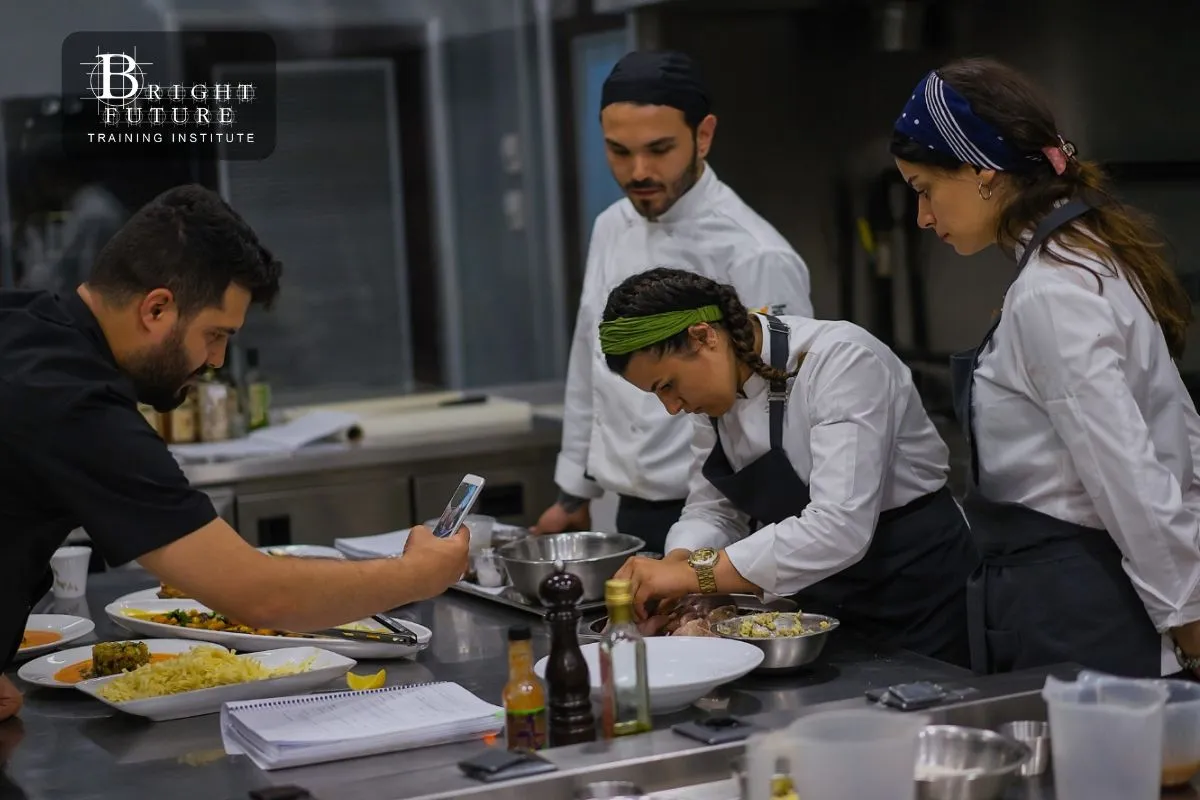
The ambient hum of a dining room at peak service is a symphony, and every trained server is a conductor. Behind the effortless glide of a sommelier presenting a bottle, the confident recommendation of a server, and the flawless recovery from a kitchen delay lies a single, powerful foundation: comprehensive F&B Service Training. This is not an introductory pamphlet; it is the master blueprint for constructing a rewarding, respected, and dynamic career at the very heart of the global hospitality industry.
Beyond the Manual: What Truly Is F&B Service Training?
F&B (Food and Beverage) Service Training is a holistic educational ecosystem. It is the deliberate and systematic process of transforming an individual from a novice into a culinary diplomat, a service engineer, and a guest memory architect. It blends hard technical skills with soft psychological acumen, procedural knowledge with creative problem-solving.
In a landscape where a single negative online review can impact revenue, and a single memorable experience can build lifelong loyalty, training is the quality-control mechanism that protects the business and empowers the professional. It is the difference between serving a table and hosting guests; between a transaction and an experience.
The Five Pillars of Unshakable Expertise
True mastery is built on five interconnected pillars. Think of them as a pyramid: each layer supports the one above it, with Guest Experience as the triumphant pinnacle.
Pillar 1: Service Engineering & Technical Choreography
This is the non-negotiable grammar of service - the precise vocabulary of movement and setup.
-
The Geometry of the Table: Training begins with the exact science of mise-en-place. This isn’t just “setting a table.” It’s knowing that the bread knife’s blade faces the bread plate, that water glasses are placed 1 inch from the knife tip, and that a formal seven-course place setting has a specific spatial logic to guide the guest intuitively. Trainees practice for speed and accuracy under pressure.
-
The Physics of Service: Tray management is a study in balance and physics. A large oval tray for banquet service is carried differently than a round drink tray. Training covers load distribution, center of gravity, and silent maneuvering through crowded spaces. Plate carrying technique - often three hot plates balanced up the arm - is drilled to prevent injury and ensure presentation perfection upon arrival.
-
The Protocol Matrix: Every action has a prescribed method. Silver Service (using a spoon and fork to serve from a platter) requires silent, seamless coordination. Clearing etiquette - never stacking plates at the table, removing specific items in which order based on the course - is a language of respect. Trainees learn the “why” behind every rule, turning protocol into instinct.
Pillar 2: The Psychology of the Guest Journey
This pillar transforms technicians into hosts. It maps the emotional arc of the guest’s experience.
-
Touchpoint Excellence & Anticipation: Training dissects the guest journey into micro-moments: the 10-second greeting rule, the temperature check after the first bite, the invisible refill of water. Servers are taught to read table dynamics—is this a business negotiation needing discretion, or a celebratory group wanting energy? Anticipation is the ultimate skill: bringing the check without being asked when a guest is rushing, or offering a blanket to a diner seated near a door.
-
Strategic Communication & Nuanced Sales: This moves beyond scripts. It’s feature-advantage-benefit selling. Not “This steak is popular,” but “The feature is it’s a 42-day dry-aged ribeye; the advantage is that the process concentrates the flavor and tenderizes the meat; the benefit to you is an incredibly rich, buttery steak that cuts like butter.” Trainees practice translating kitchen jargon into evocative, desire-building language.
-
Masterful Service Recovery: Errors are not failures; they are opportunities to demonstrate exceptional care. Trainees are drilled in a 4-step recovery protocol: 1) Listen & Empathize authentically, 2) Apologize for the Situation (“I’m so sorry your soup is cold; that’s not the standard we pride ourselves on”), 3) Solve & Empower (“Let me have the kitchen remake it immediately, and please enjoy this appetizer on us while you wait”), and 4) Follow-Up (“Is the new soup to your liking?”). This builds more loyalty than a perfect, but impersonal, visit.
Pillar 3: Product Knowledge as Storytelling
A server is the bridge between the chef’s vision and the guest’s palate. Deep knowledge builds trust and authority.
-
Menu Literacy & Culinary Intelligence: Training involves tastings, kitchen stages (shadowing), and supplier education. A server must know that the Burrata is sourced from a specific dairy in Puglia, that the scallops are diver-caught, and which dishes are naturally gluten-free. They learn about farm-to-table relationships, preservation methods (confit, curing), and mother sauces.
-
Beverage Scholarship: This is a vast sub-field:
-
Mixology & Spirits: Bartender training covers the history of spirits, distillation basics, classic cocktail genealogy (why a true Old Fashioned has no muddled fruit), and modern technique (fat-washing, clarifying).
-
The World in a Glass: Sommelier training starts with wine fundamentals - understanding terroir, varietal characteristics, and Old World vs. New World philosophies. It extends to beer (craft vs. macro, hop profiles), artisanal non-alcoholic pairings, and spirits knowledge for a discerning bar guest.
-
Coffee Science: Barista training delves into espresso extraction variables (grind size, dose, tamp pressure, water temperature), milk chemistry (creating microfoam), and single-origin flavor profiles.
-
-
The Art of Pairing: Training provides frameworks for pairing: complementary (a rich Chardonnay with buttery lobster) or contrasting (a crisp, acidic Sauvignon Blanc to cut through fried food). Trainees practice simple, confident explanations: “The bright acidity in this Sancerre will act like a squeeze of lemon on your oysters.”
Pillar 4: Safety, Sanitation & Legal Fortification
This is the armor that protects guests, the business, and the server’s career.
-
Food Safety Certification (ServSafe): This is a rigorous, science-based course on microbiology, cross-contamination vectors, temperature control (the full journey of a chicken from delivery to plate), and allergen management. Passing a national exam is often mandatory.
-
Allergen Protocol as a Lifesaving Skill: With allergies becoming more severe, training is intense. It covers the “Big 9” allergens, cross-contact prevention (dedicated fryers, separate utensils), and a bulletproof communication chain from server to manager to chef. Mistakes here are catastrophic, so protocols are non-negotiable.
-
Responsible Alcohol Service (RBS): This legal training covers ID verification techniques (checking for security features), recognizing stages of intoxication (from euphoria to confusion), intervention strategies, and legal liability. Servers learn to say “no” gracefully and firmly, understanding they are the final guardian of public safety.
Pillar 5: Systems, Technology & Business Acumen
The modern server is a tech-savvy business operator.
-
POS (Point of Sale) System Fluency: Training goes beyond order entry. It involves menu programming logic, table management (merging, splitting, transferring), inventory tracking (when the 86 list appears), and payment security protocols (handling PCI compliance at the table).
-
Understanding Key Metrics: Educated servers understand the business. They know what “cover” and “average check” mean, how “prime cost” affects the menu, and how their “sales per server” data is used. This business context turns an employee into a stakeholder.
-
Reservation & CRM Platforms: Using systems like OpenTable or SevenRooms involves managing guest preferences, tracking anniversaries, and utilizing waitlist analytics to optimize floor flow and maximize revenue.
The Tangible Return on Investment: Why This Depth Matters
For You, The Professional:
-
Career Velocity: You bypass entry-level stagnation. You become a candidate for trainer, head server, sommelier, or maître d’ roles within months, not years.
-
Significant Financial Advantage: Knowledge directly translates to higher tips. Expert pairing suggestions and seamless service increase check averages, which many tip pools are based on.
-
Global Portability: This skillset is a universal passport. A certification from a recognized program holds weight from Dubai to Dublin to Tokyo.
-
Unshakeable Confidence: Walking onto any floor, for any service, you possess the foundational knowledge to adapt, excel, and lead.
For The Employer:
-
Protected Reputation & Revenue: Consistency in guest experience defends against negative reviews and drives repeat business.
-
Operational Efficiency: Trained staff make fewer errors, reduce waste, and work as a cohesive system.
-
Cultural Foundation: A culture of continuous learning attracts and retains top talent, reducing costly turnover.
Your Path Forward: From Reading to Leading
This is not passive knowledge; it is a call to action. Your journey begins with a self-audit against these five pillars. Then, choose your forge:
-
The Immersive Crucible: Enroll in a dedicated hospitality academy or culinary school program. It’s an investment that yields a complete, polished foundation.
-
The Specialized Apprenticeship: Pursue a certificate in wine (WSET), mixology, or coffee. Become a specialist, the go-to expert.
-
The Strategic Entry: Seek employment with luxury hotel groups or acclaimed restaurant collections known for their intensive, structured in-house training. You earn while you learn to their exacting standard.
-
The Self-Directed Ascent: Combine online certifications (ServSafe, RBS) with devoured content (books, podcasts from industry leaders), networking, and relentless practice in your current role.
The world of F&B service is a meritocracy of skill, grace, and knowledge. The demand for truly trained professionals has never been higher. F&B Service Training is your toolkit. It contains every instrument you need to build not just a job, but a craft; not just a paycheck, but a legacy of memorable experiences.